PassIntel provides independent data quality assurance for aerial methane monitoring. We reconstruct each survey from data no vendor controls, assess the flight minute by minute against the method's published operating conditions, and deliver the findings as an assurance-ready technical completion report.
Structured for the evidence EU verifiers and North American regulators examine.

LIMITED ASSURANCE → REASONABLE ASSURANCE
Independent data quality assurance for aerial methane monitoring
You already have the data.Now know what it can support.
PassIntel independently reconstructs each aerial survey, assesses whether it operated within the technology's published conditions, and documents what the resulting data can and cannot support.
01 / What We DoIndependent quality assurance,
Independent quality assurance,
built into a defensible record.
EU import verification and certified-gas audits run at reasonable assurance: the auditor must confirm flights flew as tested, and holds no independent record of it.
Know if your aerial program can survive reasonable assurance.A screening flight flown outside its method's envelope risks not counting toward compliance, and that risk sits with the operator.
Know if your regulatory flights meet the standard and will count.The survey you pay for has no KPI until someone measures what the vendor actually delivered.
Know if you're getting what you're paying for.02 / How It WorksThree questions.
Three questions.
One evidence chain.
01 / FLIGHT + COVERAGE
Did it happen, and what did it cover?
We rebuild each flight from independent aircraft tracking data and lay it over your assets.
02 / TESTED CONDITIONS
Was it flown within its tested conditions?
We check every minute of the flight against the technology's published conditions, like height and wind.
03 / SENSITIVITY
What could it have seen?
We apply the method's published sensitivity to the conditions actually flown.
Kettle Mesa is a synthetic worked example. Independent tracking establishes aircraft position; confirming sensor operation requires provider records. Every figure is reproducible from the example data.
HOW A REPORT GETS MADEThe flight becomes
The flight becomes
a traceable record.
THE FLIGHT, SEEN INDEPENDENTLY
Reconstruct the survey.
Independent ADS-B surveillance data, weather, and terrain give height above ground, minute by minute. Every input is public or client-supplied. Vendor records are what gets checked, never what does the checking.
FIG 2.4 / INPUT CHAIN
KETTLE MESA / SYNTHETICOne flight. Traceable inputs.
Synthetic flight inputsSynthetic windAssumed groundCalculated by PassIntel
SELECTED PASSS-02-L04
Local position7.90, 4.10 km
Selected asset / timeC-08 / 10:39
Pressure altitudeNot supplied
Weather correctionNot supplied
Ground elevation0 m / assumed
Height above ground266.2 m
Wind at 3 m4.33 m/s
Groundspeed52.3 m/s
Nominal full swath147.6 m
Coverage margin-53.8 m
Guard band25.2 m
The map, profile and readout describe the same selected pass. Open circles show assessed minute positions; gray turns are illustrative and receive no coverage credit. Kettle Mesa supplies fictional height and wind directly, with assumed flat ground. Real engagements document independent tracking, weather and terrain sources.
EVERY GATE, EVERY MINUTE
Assess the conditions.
For this active LiDAR example, we check height and wind against the public-evidence ranges. Minute samples in transfer gaps remain unassessed. A range exceedance withholds sensitivity at that point; it does not erase eligible passes elsewhere.
FIG 2.5 / S-03 CONDITION CHECKS
7 MINUTE MARKSAssess the conditions.
HEIGHT220.1-231.8 mWithin the adopted height range
WIND AT 3 M5.81-8.86 m/sCrosses the 7.2 m/s evidence limit
CONDITION / LIMIT
00:0001:0002:0003:0004:0005:0006:00
ASSESSED MARKSHeight above ground110-280 m
✓✓-✓✓✓✓
6 / 6 in rangeWind at 3 m0.55-7.2 m/s
✓✓-✓×××
3 / 6 in rangeSolar elevation
No solar gate for this active-sensor example
NOT APPLIED10 m wind
Not supplied; sensitivity uses 3 m wind above
NOT APPLIEDOther weather inputs
Cloud, precipitation and temperature not supplied
NOT APPLIED✓ In range× Outside range- Transfer gap
Every supplied condition has its own check. Minute marks use interpolation within straight survey segments; gaps remain unassessed. These limits bound the public-model evidence, not a universal operating envelope. Stronger wind also raises the sensitivity threshold within the eligible range.
SUMMARY PAGE
One page you can hand over.
Acceptance language, each finding mapped to a technical layer your verifier can trace. Where a provider supplies its own numbers, this record is what they reconcile against. We use only detection-performance curves published in peer-reviewed research or the method's public protocol. They describe modeled capability under the assessed conditions, never whether a leak was present. Outside the stated evidence ranges, the report says “not evaluated”.
DECISION RULE / COVERAGE
Covered, indeterminate, or not covered.
A symmetric guard band, sized by the uncertainty budget. Kettle Mesa uses assigned synthetic standard uncertainties: position 5 m, asset 3 m, geometry 3 m and height 5 m, plus a 25% rectangular half-swath allowance; coverage factor 2. These assumptions do not establish real ADS-B accuracy. Borderline is the report label for indeterminate.
● COVERED◆ INDETERMINATE× NOT COVERED
-wSWATH EDGE+w
INTERACTIVE WORKED EXAMPLE / SYNTHETIC DATAReconstruct a flight,
Reconstruct a flight,
minute by minute.
Play or scrub through the canonical Kettle Mesa tracks. The aircraft position and public-evidence range checks update from the synthetic record.
KETTLE MESA / LOCAL KM GRIDNO CLIENT DATA
S-02: higher and breezier00:00
HEIGHT ABOVE GROUND244.7 m
110 mPUBLIC EVIDENCE RANGE280 m
IN RANGEHeight evidence range
WIND AT 3 m3.56 m/s
7.2
IN RANGEWind evidence range: 0.55 to 7.2 m/s
WITHIN EXAMPLE EVIDENCE RANGESIN RANGE
EXCERPT STARTSURVEY SEGMENTSEXCERPT END
Synthetic positions, heights and winds. Gray turns are illustrative and excluded from assessment; long repositioning paths are omitted. Range checks limit model use; they are not universal operating limits. No sensor operation or real surveillance record is implied.
THE COMPLETION RECORDYou watched the assessment.
You watched the assessment.
Here is what it can resolve.
 SYNTHETIC ASSESSMENT REGISTER
SYNTHETIC
WORKED EXAMPLE
Kettle Mesa
Fictional basin / 3 flight excerpts / 29 pads
SYNTHETIC
RESULTS
RESULTS
Flight record3 synthetic tracks / 327 fixesREPRESENTED
Coverage25 covered / 2 borderline / 2 not covered
86.2% clearly coveredTHREE STATES
86.2% clearly coveredTHREE STATES
Operating gates22 of 29 pads (75.9%)IN RANGE
Public model19 of 22 (86.4%) at or below 10 kg/h
65.5% of all 29 padsILLUSTRATIVE
65.5% of all 29 padsILLUSTRATIVE
S-01140.0 to 162.7 m / wind 1.36 to 2.28 m/sIN RANGE
S-02240.8 to 272.3 m / wind 3.48 to 6.45 m/sIN RANGE
S-03220.1 to 231.8 m / wind 5.81 to 8.86 m/sPARTLY OUTSIDE
2 of 3 flights stay entirely within the example's evidence ranges. Provider sensitivity: unavailable for all 29 pads.
Assigned synthetic uncertainty / k = 2Capability, never detection outcome
FIG KM-06 / SYNTHETIC ASSESSMENT
INFORMATIONALPublished probability of detection
POD AT NAMED SELECTED PASSES
ALL 22 SELECTED ESTIMATES
N-02 / S-01-L02 / 04:49: 157.1 m, 2.19 m/s, MDL90 1.38 kg/hC-08 / S-02-L04 / 10:39: 266.2 m, 4.33 m/s, MDL90 8.64 kg/h3 covered pads have no in-range covering opportunity; no sensitivity number.
19 of 22 eligible assets (86.4%) are at or below the illustrative 10 kg/h reference, representing 65.5% of all 29 pads. Blue points are at or below; amber points are above. 3 of 22 (13.6%) are above; 7 of 29 (24.1%) have no eligible estimate. The highest estimate is 11.188 kg/h, 11.88% above the reference; comparisons use full precision. This is not a contractual or regulatory threshold. Curves describe modeled capability, never an observed leak or delivered performance. Wind at 3 m directly affects sensitivity: stronger wind raises the modeled threshold at fixed height. The wind evidence limit separately controls where this model is used. The 110 to 280 m height and 0.55 to 7.2 m/s wind limits bound the public evidence; they do not validate every combination. S-03 retains estimates for eligible early passes and withholds them outside those ranges. Conrad, Tyner & Johnson (2023), Eq. 8/9 and published SI.
KETTLE MESA / SAMPLE REPORT
See the complete assessment.
17 pages. Full findings, figures and flight evidence. Synthetic data.
The invoice proves you paid. This is the receipt for what you got.
For operators ↗Your work, independently corroborated, in your client's file.
For providers ↗You sign the statement. We supply the evidence layer.
For verifiers ↗03 / Why NowLimited assurance today.
Limited assurance today.
Reasonable assurance tomorrow.
TODAY · LIMITED ASSURANCE
- The opinion is a negative one: “nothing came to our attention.”
- Vendors attest their own coverage and sensitivity; the paperwork is the evidence.
- Day-of-flight operating envelope ascertainment is assumed from prior controlled testing.
TOMORROW · REASONABLE ASSURANCE
- The opinion is a positive one: the verifier must show the number holds.
- Operating envelopes established minute by minute, against records.
- The process behind the claim is examined, not accepted.
WHAT CHANGES
- The flight itself becomes evidence.
- Evidence can't be recreated after the fact.
- Someone independent has to already hold it. PassIntel does.
WHERE IT IS ALREADY WRITTEN DOWN
Primary-source assurance and monitoring requirements, presented as exhibits.
EXHIBIT 01
Market · certified gasWhat the MiQ auditor must confirm about the monitoring technology:
“Confirm the operating conditions during single blind testing mirror Facility's operating conditions”MiQ Audit Protocol, Table II.10 · reasonable assurance only; limited assurance is not permitted (II.4.2.1)
IN EFFECTNovember 2, 2026 · updated MiQ protocol
SO WHAT: Certified gas is how sellers reach buyers such as Meta, whose 2026 RFP sought MiQ certificates. The auditor behind every certificate must confirm the technology flew as tested, and has no independent record of it. That record is ours.
EXHIBIT 02
International · EU importsWhat the EU reference protocol requires demonstrated, for every measurement technology used:
“…operated within its specified conditions and limitations.”EEMDL EUMR Verification Protocol v1.0 (Aug 2026), Annex A §3.2.5 · a reference protocol for Regulation (EU) 2024/1787 import verification
EU TIMINGCurrent law: January 1, 2027 · first MRV evidence report: May 31, 2028 (covering 2027)
SO WHAT: A further delay is under consideration. Current rules still require producer-level MRV equivalence from 2027 for contracts concluded or renewed on or after August 4, 2024; older contracts have a reasonable-efforts duty. The Commission recommends a non-binding pause on certain importer penalties for obligations due in 2027-2029. Keep the monitoring evidence as implementation evolves.
EXHIBIT 03
Regulatory · US & CanadaWhat the US rule uses to set required screening frequency:
“…based on the minimum aggregate detection threshold of the method used to conduct the periodic screenings.”40 CFR 60.5398b, Tables 1 and 2 · AER Directive 060 Alt-FEMP · SOR/2019-266
IN EFFECTNow · OOOOb screening in force; Alt-FEMP live
SO WHAT: A screening flight flown outside the approved method's own conditions risks not counting toward compliance. That risk sits with the operator, not the vendor.
Every verbatim on this page renders exactly as printed in its source and is character-verified against the cited document.
04 / PricingPriced by the work.
Priced by the work.
Not the outcome.
Report tiers are per campaign or survey, sized by aircraft flight tracks.
FOUNDING PILOT COHORT50% off reports and evidence packages.Discuss a campaign ↗
Technical Completion Report
Small$250up to 5 tracks
Medium$500up to 10 tracks
Large$1,000up to 15 tracks
EnterpriseCustom
Report + Full Data Package
The report plus the full data and rerun instructions, built for your verifier's file.
Small$500
Medium$1,000
Large$2,000
EnterpriseCustom
Subscription
CustomEvery campaign in the period, continuously, with bespoke add-ons like satellite-aware timing and airspace intelligence.
Pre-Audit Assessment
CustomA readiness review of your monitoring evidence before you face a certifier, verifier, or auditor.
05 / AboutBuilt by someone who ran
FOUNDER & CEO
Built by someone who ran
aerial survey operations.
For evidence that holds up.
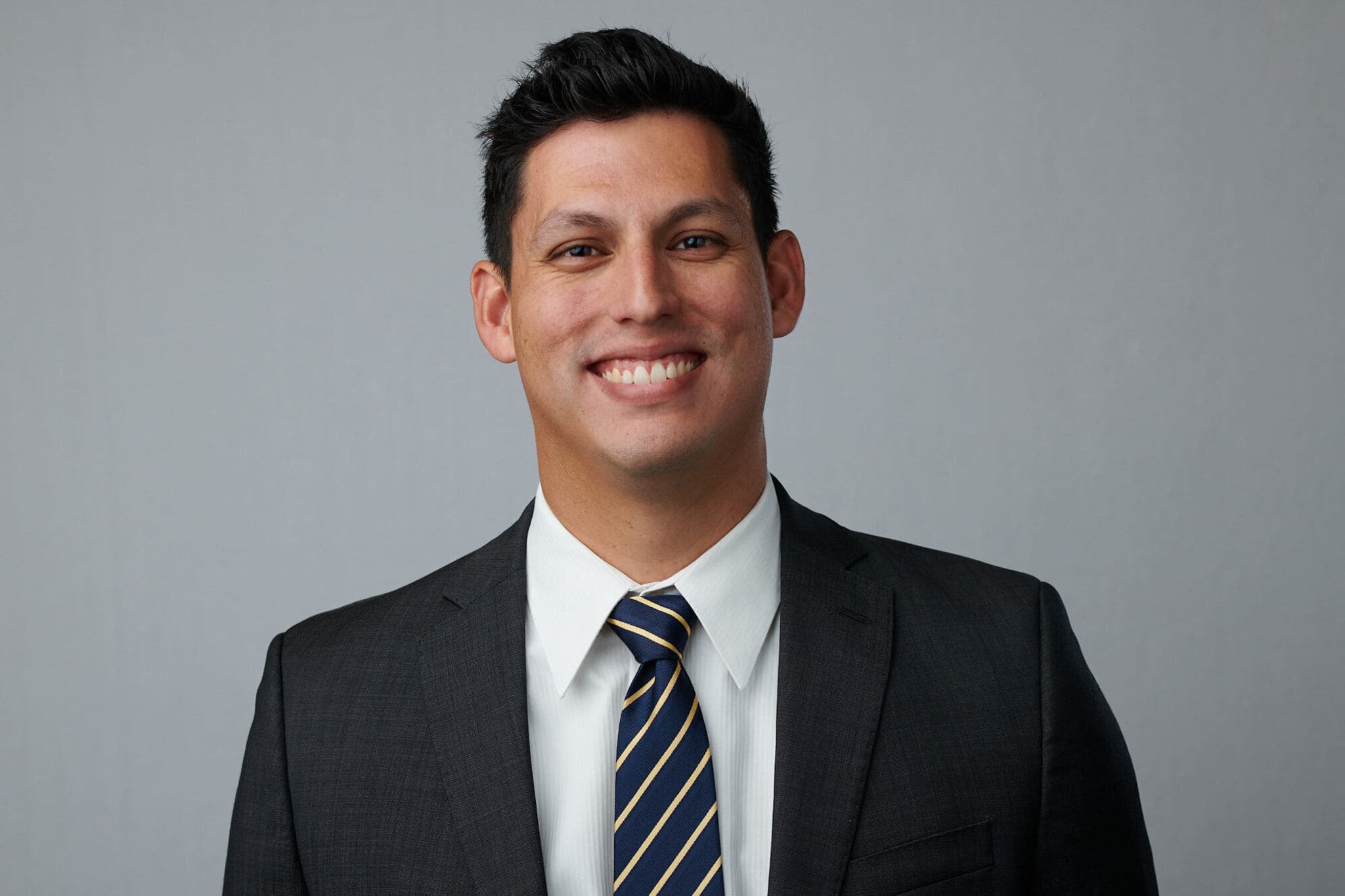
FOUNDER & CEOGabe founded PassIntel after 3.5 years leading global survey management for a major aerial methane leak detection provider, coordinating domestic and international fleets flying more than 10,000 hours each year.
He previously served 10 years as a U.S. Army officer and HH-60 Black Hawk aeromedical evacuation pilot across Alaska, Afghanistan, and Korea. That experience in aviation operations, mission planning, and airspace management underpins PassIntel's independent, conditions-first approach to methane monitoring evidence.
He has also completed ISO 14064 GHG Lead Verifier training, bringing the verifier's evidence requirements directly into how PassIntel structures its work.
THE NEXT CAMPAIGN
Put an independent record behind it.
Walk through the synthetic example, then decide if the record is worth keeping.
Play a Kettle Mesa flightSchedule a WalkthroughWe reply within 48 hours. No sales automation.
24 satellites tracked9,976 aircraft classifiable28 operator fleets